
Intellectual property rights for intelligent medicine, diagnostics, and implant technologies
This cluster bundles patent applications from the fields of medical technology, imaging diagnostics, AI-supported assistance systems, surgical robotics, endoscopy, implant technology, drug delivery and biotechnological processes.
The applications address key challenges in modern medicine: earlier and more precise diagnostics, minimally invasive treatment, personalised therapy, improved implant compatibility, automated image analysis, intelligent control of medical systems, and safe and efficient patient care.
This means the cluster is particularly aimed at medical technology companies, diagnostics providers, implant manufacturers, clinic technology providers, manufacturers of surgical assistance systems, biotech companies, strategic investors, licensees and development partners with a focus on digital medicine, implants, medical sensor technology and AI-supported health applications.
KHD-2025 / 10-12
Apparatus and Method for Continuous In Vitro Synthesis of RNA Molecules in a Microfluidic System
Number of patent claims 19 patent claims.
Maturity & IP Status pending / under examination„
Description
The invention relates to an integrated microfluidic system for the continuous production of RNA molecules for pharmaceutical applications. Conventional production methods often work discontinuously and can be limited in terms of reproducibility, product purity, process duration, and industrial scalability.
The general approach involves integrating the essential process steps of RNA synthesis into a continuously operated, compact system. Reaction control, purification, and quality monitoring are functionally integrated to enable more uniform process control and more controlled product quality.
The benefit lies in more efficient, reproducible, and scalable manufacturing of high-quality RNA products. This can be particularly important for mRNA-based vaccines, RNA therapeutics, biopharmaceutical development processes, and flexible production platforms.
The technology thus addresses key requirements of modern biotechnological production: quality, process safety, scalability, and potential shortening of manufacturing processes.
KHD-2025 / 10-21
Functionalised nanoparticles with an endosomally cleavable linker and defined ligand density for targeted drug delivery
Number of patent claims 16 Patent claims.
Maturity & IP Status pending / under examination„
Description
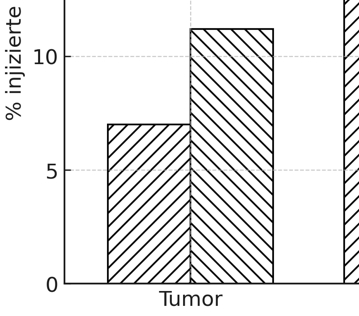
The invention relates to a platform for functionalised nanoparticles for targeted delivery of therapeutic agents. It addresses the problem that known drug carrier systems often enable either targeted addressing or controlled release, but do not reliably combine both requirements with high reproducibility. The general solution approach consists of a nanoparticle structure with a protective surface, defined target binding and environmental sensitivity, which supports controlled drug release after uptake into target cells.
This allows active ingredients to be delivered more precisely to desired biological target structures and reduces unwanted distribution.
The benefit lies in improved efficacy, more controlled release characteristics, and better suitability for modern therapeutic approaches.
Relevant fields of application include, in particular, pharmaceutical drug delivery, targeted cancer therapy, RNA and gene therapy, as well as diagnostic-therapeutic applications.
KHD-2025 / 11-01
AI-powered, closed-loop, portable ultrasound device with real-time image parameter optimisation
Number of patent claims 12 Patent claims.
Maturity & IP Status pending / under examination„

Description
The invention relates to a portable ultrasound device for mobile and point-of-care applications, in which an integrated AI component continuously monitors image quality during the examination and automatically optimises technical recording parameters. The application thus addresses the problem that the quality of portable ultrasound images can be highly dependent on experience, operation and changing examination conditions.
The general solution approach consists of a closed, AI-supported control loop that evaluates image data during acquisition and independently adapts the system to the respective examination situation. This can improve image display, ease of use, and diagnostic reliability, particularly in mobile applications, point-of-care diagnostics, emergency medicine, care facilities, and decentralised healthcare settings.
The potential benefits lie in more uniform image quality, reduced user dependency, more efficient operation, and improved support for medical decisions without disclosing reproducible technical details.
KHD-2025 / 11-02
Autonomous AI endoscope with self-navigation
Number of patent claims 22 Patent claims.
Maturity & IP Status pending / under examination„
Description
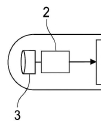
The invention relates to a miniaturised, autonomous endoscope system for medical diagnostics. The aim is to make endoscopic examinations safer, more precise, and less dependent on manual guidance or external control. The system uses artificial intelligence, camera and sensor data, and adaptive navigation logic to independently orient itself within body cavities, detect obstacles, and specifically target relevant examination areas.
The general approach to finding a solution involves a combination of autonomous navigation, intelligent environmental modelling, energy-efficient motion planning, and safety-oriented operational functions. This allows the endoscope to support examinations more flexibly, improve diagnostic workflows, and offer additional technological assistance to medical personnel.
The areas of application are particularly in endoscopic examination, image-guided diagnostics, minimally invasive medical technology and AI-supported medical devices.
KHD-2025 / 11-03
Method and system for AI-supported dynamic control of a surgical robot
Number of patent claims 19 patent claims.
Maturity & IP Status pending / under examination„
Description
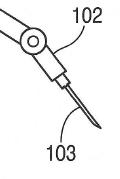
The invention relates to an AI-supported control of surgical robot systems, intended to enable more precise and safer instrument guidance during surgical procedures. Existing systems often work with static planning and navigation models and react only to a limited extent to changes in the anatomical situation during the procedure. The general solution approach consists of merging available planning, image, and sensor data into a continuously updated anatomical model and deriving adaptive support for instrument movement from this.
In addition, a safety-oriented review is provided to more robustly identify potential hazard situations and support appropriate protective measures. The potential benefits include improved operational precision, higher patient safety, better traceability of robotic decisions, and stronger assistance for the surgeon.
Relevant applications are particularly in robot-assisted surgery, surgical navigation, teleoperation, medical assistance systems, and AI-based safety systems for medical technology applications.
KHD-2025 / 11-04
Portable ultrasound probe with AI-based auto-guidance, multi-modal feedback, and adaptive user guidance
Number of patent claims 52 Patent claims.
Maturity & IP Status pending / under examination„
Description
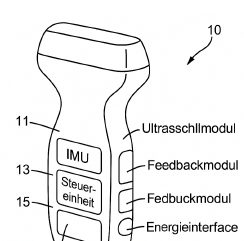
The invention relates to a portable ultrasound probe that assists users with precise positioning during medical ultrasound examinations. The technical problem is that handheld ultrasound examinations heavily rely on experience, correct probe handling, and continuous image monitoring. Mispositioning can affect image quality, examination duration, and user comfort.
The general solution approach combines ultrasound data, motion capture, and AI-powered analysis to provide the user with understandable feedback during application. This feedback can be delivered via haptic, visual, or acoustic signals and is intended to make probe guidance more intuitive, faster, and reproducible.
The benefit lies in improved examination quality, easier operation of portable ultrasound devices, and better support for less experienced users. Areas of application are particularly in point-of-care diagnostics, mobile medicine, telemedicine, training systems, and portable medical assistance systems.
KHD-2025 / 11-05
Compact, cryogen-free operating magnetic resonance imaging system with a high-temperature superconducting magnet and AI-supported image reconstruction
Number of patent claims 15 Patent claims.
Maturity & IP Status pending / under examination„
Description
The invention concerns a compact magnetic resonance imaging system for medical imaging that can be operated without liquid cryogens. Conventional MRI systems are often large, expensive, and reliant on stationary infrastructure, while portable systems often exhibit limitations in image quality and diagnostic power.
The general solution approach combines a high-temperature superconducting magnet with integrated cryogen-free cooling, a compact system architecture, and AI-powered image reconstruction. This is intended to enable high-quality imaging even in decentralised, mobile, or space-constrained medical application environments.
The benefit lies in improved availability of diagnostic MRI imaging outside of traditional large hospitals, reduced reliance on complex cryogenic supply, and enhanced mobility and energy efficiency. Relevant applications particularly include medical facilities, mobile diagnostic units, emergency care, regional healthcare centres, and point-of-care imaging.
KHD-2025 / 11-06
An breath analysis sensor for early detection of tumour diseases with AI-supported gas sensor technology, user-specific reference database and multimodal data integration
Number of patent claims 23 Patent Claims.
Maturity & IP Status pending / under examination„
Description
The invention relates to a compact, non-invasive breath analysis system for the supportive early detection of tumour diseases. The technical problem lies in reliably evaluating breath gas data on a user-specific and data-protection-friendly basis, without relying on large, central laboratory infrastructures. The general solution approach combines sensor-based breath gas detection with local AI-supported evaluation, user-specific referencing, automatic system adaptation, and the optional integration of further health data.
This allows conspicuous patterns in exhaled air to be detected early, changes over time to be better classified, and results to be provided in real-time.
The benefit lies in more accessible, adaptive, and decentralised preventive and follow-up control technology.
Relevant application areas include early medical detection, preventive health monitoring, near-patient diagnostics, telemedicine applications, and mobile or wearable health systems.
KHD-2025 / 11-07
3D-printed titanium implant with integrated antibacterial nanocoating
Number of patent claims 17 patent applications.
Maturity & IP Status pending / under examination„
Description
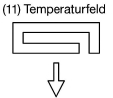
The patent application relates to an additively manufactured titanium implant with a process-integrated antibacterial surface function. The objective is to reduce the risk of implant-related infections while simultaneously improving adhesion, biocompatibility, and process reliability. The general solution approach consists of not applying the antibacterial coating in a separate post-treatment step, but integrating it into the manufacturing process or immediately thereafter in a protected process environment. This allows for a particularly stable connection between the implant surface and the functional layer to be created.
The benefit lies in improved long-term effectiveness, reduced susceptibility to contamination, simplified manufacturing, and expanded functionality of modern implants. Relevant areas of application include, in particular, patient-specific implants, medical titanium components, orthopaedic applications, implant technology, and additive manufacturing in medical technology.
KHD-2025 / 11-08
Capsule endoscope with integrated magnetic coil, external control and navigation device, AI-supported regulation and energy transmission
Number of patent claims 23 Patent Claims.
Maturity & IP Status pending / under examination„
Description
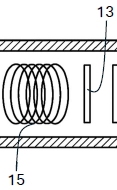
The invention relates to an actively steerable capsule endoscope for medical diagnostics and potentially supportive therapeutic applications in the digestive tract. Conventional capsule endoscopes move predominantly passively through natural bodily movements and offer only limited possibilities for targeted navigation, stabilisation, and power supply. The application describes an approach in which a swallowable capsule interacts with an external control and navigation system. This is intended to provide more controlled support for position, orientation, image acquisition, and power supply. Additionally, computer-assisted evaluation of image and position information can improve navigation and enable more targeted examination of relevant areas.
The benefit lies in more precise, efficient, and patient-friendly endoscopic diagnostics, particularly where better controllability, more stable imaging, and an optimised examination of internal body sections are desired. Areas of application are primarily in modern medical technology, gastrointestinal diagnostics, minimally invasive examination techniques, and advanced capsule endoscopy systems.
KHD-2025 / 11-09
Implant with biodegradable magnesium coating and controllable resorption rate
Number of patent claims 17 patent applications.
Maturity & IP Status pending / under examination„
Description
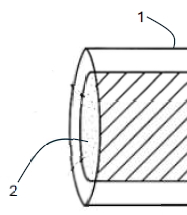
The invention relates to a bioresorbable implant for medical applications, the degradation behaviour of which can be specifically influenced in the body. Existing resorbable implants often do not offer sufficiently controlled timing between initial stability and subsequent biological degradation. The general solution approach consists of a biodegradable magnesium-based coating that is functionally matched to the implant substrate and controls the resorption process. This allows the implant to assume a defined support function during the healing phase and then degrade in a controlled manner.
The benefits lie in improved adaptation to different healing processes, a reduced need for later removal procedures, and the possibility of integrating additional healing-supportive or monitoring functions. Relevant areas of application are particularly orthopaedic, dental, traumatological, and cardiovascular implant applications.
KHD-2025 / 11-10
Prosthesis with adaptive haptic feedback, textile power supply and machine signal processing
Number of patent claims 14 patent claims.
Maturity & IP Status pending / under examination„
Description
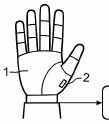
The patent application relates to an intelligent prosthesis that is intended to detect, evaluate, and convey touches and physical impacts to the user as adapted haptic feedback. The technical problem lies in developing conventional prosthesis feedback from simple, rigid signals towards more differentiated, learnable, and user-specific perceptual support.
The general solution approach combines an integrated sensor system, machine signal processing, adaptive haptic feedback, and textile power supply and telemetry. This allows the prosthesis to detect touch events or object properties of a general nature and translate them into feedback that the user can perceive, without revealing the technical implementation in detail.
The benefit lies in improved everyday usability, more natural interaction with objects, greater adaptability to the user, and enhanced monitoring and diagnostic capabilities. Relevant areas of application include, in particular, modern medical prosthetics, neuroprosthetic applications, tactile assistance systems, and robotic exoskeletons.
KHD-2025 / 11-30
Proton therapy system with compact superconducting gantry
Number of patent claims 45 Patent claims.
Maturity & IP Status pending / under examination„
Description
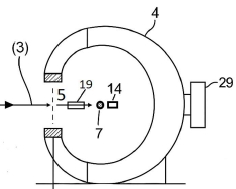
The invention relates to a proton therapy system with a particularly compact, superconducting gantry for medical radiation therapy. The aim is to significantly reduce the structural effort, system mass and space requirements compared to conventional proton therapy systems, without compromising the beam quality and precision required for treatment.
The general approach to a solution involves integrated superconducting beam guidance within a rotatable gantry, where magnetic technology, cryogenic technology, beam guidance, patient positioning, beam diagnostics, and safety management are coordinated. This allows the proton beam to be guided to the treatment centre in a compact and controlled manner.
The benefit lies in more space-saving proton therapy facilities, reduced structural requirements, improved technical integration, and increased operational reliability. Areas of application include modern particle therapy centres, compact treatment rooms, multi-room facilities, and potentially the retrofitting of existing medical radiotherapy infrastructures.
KHD-2025 / 11-31
Cloud-based AI remote diagnostic platform for MRI and CT image data with quality-controlled triage and federated learning
Number of patent claims 25 Patent claims.
Maturity & IP Status pending / under examination„
Description
The invention relates to a cloud-based platform for AI-supported radiological reporting processes, particularly for medical imaging data from MRI and CT examinations. In highly utilised or teleradiological care environments, the problem is that urgent examinations must be reliably detected and prioritised, while at the same time, cases with technically limited assessability must be appropriately handled.
The general solution approach combines automated image analysis with quality-related assessment of examination data, structured prioritisation of radiological cases, and the integration of specialist feedback. Additionally, a data protection-oriented learning concept is described, which enables improvements to the AI analysis across multiple medical facilities without the need to consolidate raw image data centrally.
The benefit lies in an improved overview of critical cases, more efficient reporting management, greater traceability of AI-supported decisions, and continuous quality improvement. Areas of application include radiology, teleradiology, hospital networks, emergency care, oncological follow-up monitoring, and medical IT platforms.
KHD-2025 / 11-26
Implantable insulin delivery system with AI-based closed-loop control and safety-encapsulated execution
Number of patent claims 30 patent claims.
Maturity & IP Status pending / under examination„
Description
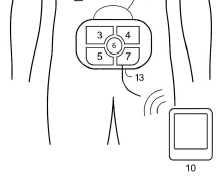
The invention relates to an implantable insulin delivery system for the automated support of diabetes therapy. The aim is to control insulin delivery continuously, in a patient-specific manner and with an increased level of safety, without significantly increasing the patient's operating effort.
The general approach to a solution combines implantable sensors, insulin delivery, and an electronic control unit into a closed-loop system. An AI-supported control model can take individual metabolic profiles into account and adaptively support therapy. At the same time, a safety-encapsulated architecture is planned, where proposed dosages are independently monitored and only released or limited after a safety-related check.
The benefits include improved everyday usability, more individualised insulin therapy, a reduction in manual interventions, and increased operational safety through monitoring, plausibility checks, fallback functions, and external control or remote monitoring options. Relevant application areas are medical technology, implantable therapy systems, diabetes care, digital health solutions, and safety-critical AI-supported implant technologies.