
Protection rights for modern HIP processes and high-performance industrial materials
This cluster bundles protection registrations from the field of HIP / Hot Isostatic Pressing and related processes for the densification, quality improvement, process monitoring, and post-treatment of sophisticated materials and components.
The applications address key challenges in modern high-performance manufacturing: higher component quality, improved process reliability, reproducible densification, controlled post-treatment of additively manufactured components, efficient process control, material purity, quality assurance, and energy-optimised plant concepts.
This makes the cluster particularly relevant for HIP plant manufacturers, heat treatment service providers, additive manufacturing companies, aerospace suppliers, medical technology manufacturers, high-performance materials producers, industrial companies, strategic investors, licensees, and development partners focusing on metallic, ceramic, and high-strength functional components.
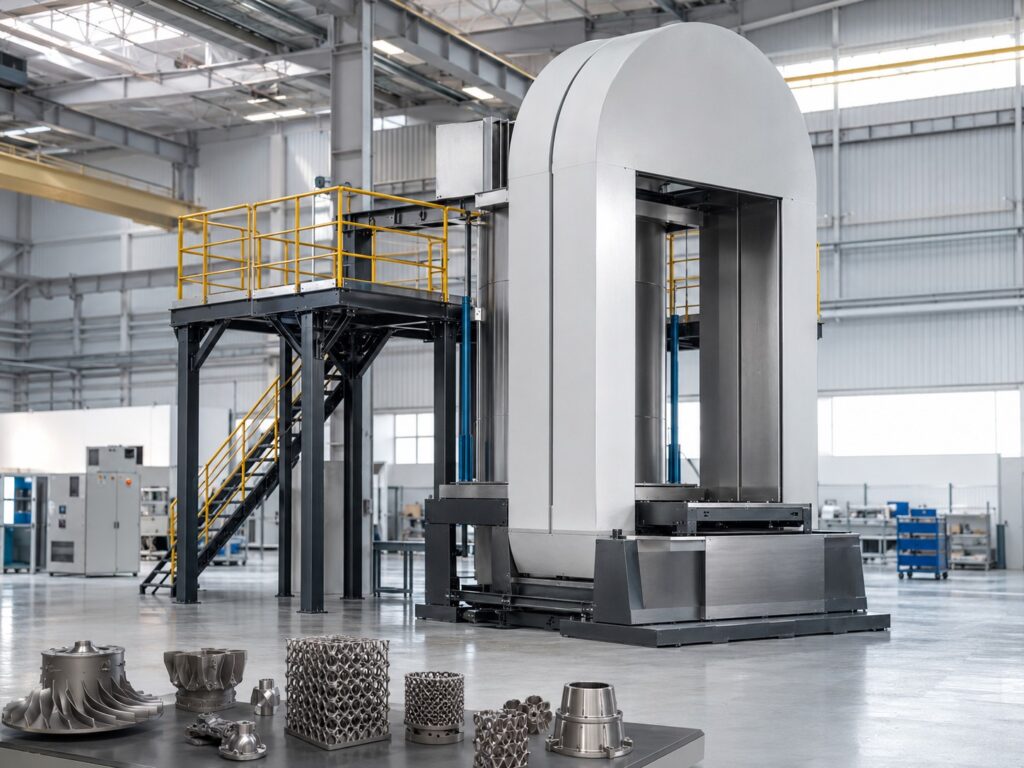
KHD 2026-01-01-HIP-A
Capsule and capless sealing systems with upstream leak testing, decision logic, test documentation, and interlock for the preparation of HIP processes
Number of patent claims 32 patent claims.
Maturity & IP Status pending / under examination„

Description
The invention relates to a sealing and testing system for preparing hot isostatic pressing treatments. The aim is to test workpieces for a suitable sealing condition more reliably, reproducibly, and documentably before a HIP process. This is intended to reduce faulty batches, unnecessary process costs, and subsequent scrap.
The general solution approach combines capsule-based and capsule-free sealing concepts with an upstream leak test, an automated evaluation of the test result, and a clear release, rework, or exclusion decision. Additionally, the test can be digitally documented and linked to a plant release, so that a HIP process is only started if the preliminary test is positive.
The benefits include, in particular, higher process reliability, better traceability, standardised preparation procedures, and reduced risk of failure for quality-critical components. The technology is particularly relevant for industrial HIP processes, additively manufactured metal components, and series applications with high demands on leak-tightness, quality assurance, and documentation.
KHD 2026-01-02-HIP- B
Method and apparatus for controlling a hot isostatic pressing treatment with accelerated cooling
Number of patent claims 25 Patent claims.
Maturity & IP Status pending / under examination„
Description
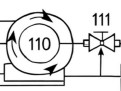
The invention relates to an advanced process control for the hot isostatic pressing treatment of workpieces, particularly for demanding metal components and additively manufactured components. The technical problem is that accelerated cooling phases, while they can shorten throughput times and improve material properties, can simultaneously cause temperature differences, distortion, residual stresses, or quality deviations.
The approach involves a supervised and controlled HIP cycle, where the cooling process is not considered in isolation, but rather in conjunction with pressure control, temperature monitoring, and appropriate compensatory measures. This is intended to enable process-reliable, reproducible, and component-friendly cooling, without compromising the quality requirements of sensitive geometries.
The benefits lie in a reduced scrap rate, higher dimensional accuracy, better process documentation, and more efficient furnace runs. Relevant application areas include high-quality metal components, additively manufactured components, aerospace, energy technology, medical technology, toolmaking, and industrial HIP services.
KHD 3 January 2026-HIP-C-A
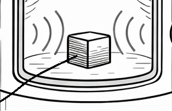
In-situ monitoring and quality control in hot isostatic pressing (HIP) using acoustic resonance and optical-spectroscopic process gas diagnostics, with optional gas management and batch record.
Number of patent claims 25 Patent claims.
Maturity & IP Status pending / under examination„
Description
The invention relates to a method and system for in-process monitoring and quality control during hot isostatic pressing. The aim is to make quality risks such as porosity, contamination, outgassing or leakage discernible earlier and more reliably during the ongoing HIP process. To this end, process gas information is captured in situ and condensed into quality indicators that enable an automated assessment of the process status.
On this basis, process deviations can be detected, appropriate process actions can be triggered, and the reproducibility of demanding HIP treatments can be improved. Optionally, gas management with monitoring and cleaning functions can be integrated. Batch-related documentation supports traceability, quality assurance, and auditability.
The benefits include reduced faulty batches, less overprocessing, improved process reliability and higher component quality, particularly for quality-critical metal components and additively manufactured parts.
KHD 2026-01-04-HIP-C-B
Clean-HIP with in-process quality monitoring and control using acoustic resonance and optical-spectroscopic process gas diagnostics, featuring multi-stage gas purification, a purification efficiency parameter, predictive diagnostics and an auditable batch record
Number of patent claims 36 patent claims.
Maturity & IP Status pending / under examination„

Description
The invention relates to a Clean HIP concept for hot isostatic pressing processes, in which the quality of an ongoing process can be monitored and influenced not only after completion but also during the process. The aim is to make risks such as contamination, outgassing, leakage, incomplete densification, or unnecessary over-processing recognisable at an early stage.
The general approach combines monitored process gas control with multi-stage gas purification, acoustic and/or optical-spectroscopic process gas diagnostics, and a control-oriented evaluation of the recorded process data. From this, general quality indicators can be derived and used for process corrections, diagnostic alerts and traceable batch documentation.
The benefits lie in increased process reliability, better reproducibility, reduced batch rejects, improved traceability, and enhanced auditability of demanding HIP processes. Relevant application areas include quality-critical HIP applications for high-performance metallic components, additively manufactured components, and sensitive materials.
KHD 2026-01-05-HIP-D
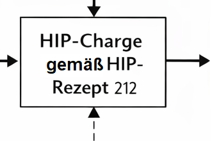
Technical processor orchestration for HIP using data-driven recipe selection, CT-supported load optimisation, qualification coupons and integrity-assured batch records with control-side start release
Number of patent claims 25 Patent claims.
Maturity & IP Status pending / under examination„
Description
The invention relates to digital process control for hot isostatic pressing, particularly for quality-critical metal components and additively manufactured components. The starting point is the problem that HIP processes are often characterised by manual recipe selection, experience-based loading, and subsequent documentation. This can lead to variations, incorrect parameter settings, incomplete traceability, and increased qualification effort.
The general approach to a solution involves linking technical input data, testing and qualification information, loading planning, and digital batch documentation in a continuous process chain. A released process flow is secured in a machine-testable manner, so that the plant can only be started after a successful conformity and integrity check.
The benefits lie in higher process security, better reproducibility, reduced susceptibility to errors, more efficient plant utilisation, and improved auditability. Relevant areas of application include industrial HIP processes, heat treatment, additive manufacturing, quality-critical metal components, and regulated production environments.
KHD 2026-01-06-HIP-E
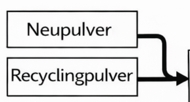
Powder Quality Assurance, Conditioning and Recycling Approval for HIP-Critical AM Applications using HIP-Readiness Index and Contamination Fingerprinting
Number of patent claims 37 Patent claims.
Maturity & IP Status pending / under examination„
Description
The invention relates to the quality assurance and reuse of metallic powders for additive manufacturing with downstream HIP treatment. The aim is to comprehensiblely evaluate powder batches not only with regard to general printability but also with regard to their suitability for demanding HIP process chains. For this purpose, a data-based assessment approach is used, which combines relevant powder states, derives a HIP-related suitability index from them, and supports a documented decision on release, post-treatment, mixing, quarantine, or blocking.
The solution approach enables a closed quality assurance process, where powder treatments are not only carried out but subsequently re-checked and documented. Additionally, a batch-related contamination assessment can be used to better identify anomalies and increase traceability.
The benefit lies in lower scrap risks, safer powder reuse, improved auditability, and more stable AM-HIP process chains for high-quality metallic components.
KHD 2026-01-07-HIP-F
HIP diffusion bonding of microchannel components with a selective interlayer, a multi-purpose process/test port and quality-assured leak-tightness approval
Number of patent claims 29 patent claims.
Maturity & IP Status pending / under examination„
Description
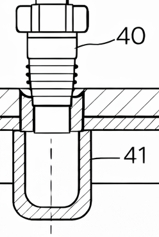
The patent application concerns a quality-assured manufacturing and testing solution for leak-critical microchannel components, particularly for compact heat exchangers, fluidic modules, and process engineering components. The focus is on the technical problem of permanently and reliably sealing internal channel structures while simultaneously reducing scrap, testing uncertainty, and lack of traceability in manufacturing.
The general solution approach combines HIP-assisted diffusion bonding with a specifically applied joining aid in the leak-tight relevant area, as well as a defined process and testing interface. This interface can be used within the production chain for both preparing the joining process and for subsequent leak testing. Additionally, quality-assured release based on objective test results is planned.
The benefits lie in increased process reliability, reproducible component quality, improved series capability, and documented release of leak-critical components. Relevant application areas include industrial microchannel technology, thermal management, high-pressure fluidics, hydrogen technology, vacuum technology, aerospace, and demanding process and cooling circuits.
KHD 2026-01-08-HIP-G-1
Integrated binder jetting post-treatment with measured value-based release, locked gas guidance and controlled transition to sintering and HIP densification
Number of patent claims 28 claims.
Maturity & IP Status pending / under examination„
Description
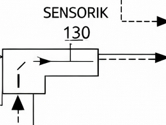
The invention relates to an integrated post-processing of workpieces produced by binder jetting. For such components, the challenge lies in reliably removing binder residues, residual gases, and possible contaminants before subsequent densification and heat treatment steps are carried out. Insufficiently controlled transitions can lead to quality fluctuations, defects, increased scrap rates, and longer process chains.
The general approach to a solution involves more strongly coupling central process steps such as debinding, sintering and HIP densification, and making releases based on monitored state information rather than solely on time or temperature. In addition, a secure gas flow is provided to avoid undesirable mixing and recontamination between process areas.
The benefit lies in more robust process management, reduced handling and intermediate storage steps, better traceability, and higher reproducibility of component quality. Relevant application areas are particularly industrial binder jetting process chains for metallic, powder metallurgical, and high-strength technical components.
KHD 2026-01-09-HIP-G-2
HIP treatment for additively manufactured aluminium alloys with hydrogen management for pore reduction
Number of patent claims 27 patent claims.
Maturity & IP Status pending / under examination„
Description
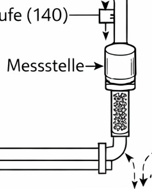
The invention relates to an improved post-treatment of additively manufactured aluminium components using hot isostatic pressing. In such components, gas-related pores can impair density, fatigue strength, leaktightness, and reliability. The approach involves specifically preparing the state of the component and the process atmosphere prior to the actual densification step, and monitoring this using suitable measurement information. Only when an appropriate process state has been achieved is the continuation of the HIP treatment released.
This is intended to reduce the risk of gas-driven pore formation or pore stabilisation during critical process phases. The solution combines pre-treatment, process monitoring, release decision-making, and adapted HIP control into a reproducible process chain.
The benefit lies in higher component density, lower scrap rates, more stable mechanical properties, and better qualifiability of additively manufactured aluminium components. Relevant areas of application include demanding lightweight construction, mobility, aerospace, energy, and industrial applications where dense and resilient aluminium components are required.
KHD 2026-01-10-HIP-G-3
HIP parameter window for nickel-based superalloys with targeted carbide network optimisation
Number of patent claims 27 patent claims.
Maturity & IP Status pending / under examination„
Description
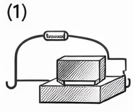
The invention relates to an advanced HIP treatment for components made from nickel-based superalloys, which are used in demanding high-temperature environments. The technical problem is that while conventional HIP processes can reduce internal defects, microstructural differences can arise that affect creep strength, lifespan, and reproducibility.
The general solution approach involves combining material densification with targeted microstructural optimisation, and ensuring the treatment through appropriate testing and release concepts. This allows the production of components with higher process stability, improved quality assurance, and less variation in creep-relevant properties.
The areas of application are particularly in highly stressed components for turbomachinery, aerospace, energy plants, high-temperature process engineering, as well as additively or powder metallurgically manufactured high-performance components.
KHD 11-01-2026 HIP G 4
HIP treatment of titanium implants with zoned masking to preserve defined surface porosity during in-situ compaction
Number of patent claims 23 Patent Claims.
Maturity & IP Status pending / under examination„
Description
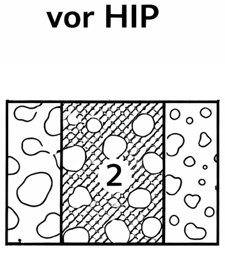
The invention relates to the after-treatment of titanium implants, particularly for orthopaedic and dental applications. With such implants, there is a technical design conflict: on the one hand, internal irregularities and porosities are to be reduced in order to improve mechanical reliability, fatigue strength and fracture resistance. On the other hand, selected porous surface areas must be preserved, as they can be important for bone ingrowth, integration behaviour and long-term stability.
The general approach to the solution involves zoned, temporary masking during HIP treatment. This allows selected surface areas to be protected or functionally preserved, while the inner implant area is purposefully densified. In addition, a quality-oriented inspection and acceptance concept supports the reproducible evaluation of surface and core areas.
The benefit lies in more robust implants with preserved biologically relevant surface function. Areas of application are particularly in modern titanium implants, additively manufactured implant structures, as well as porous or coated implant surfaces.
KHD 2026-01-12-HIP-G-5
HIP-enabled powder-in-tube route for high-purity refractory metals with a liner and degassing/release concept
Number of patent claims 33 Patent claims.
Maturity & IP Status pending / under examination„
Description
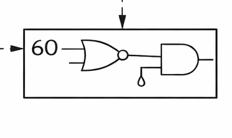
The invention relates to a HIP-compatible powder-in-tube route for producing high-purity, densely compacted components made of refractory metals. The technical problem is that with such materials, even minor impurities, residual gases, or interactions between the powder, cladding, and process environment can adversely affect component quality, reproducibility, and subsequent operational readiness.
The general approach to the solution involves preparing the powder in an encapsulated setup with an internal barrier function, degassing it specifically before hot isostatic pressing, and only sealing it after a quality-related release, thereby linking the encapsulation and degassing phases more closely with process monitoring and quality assurance, rather than relying solely on empirical values.
The benefit lies in higher purity, improved density, reduced process scatter, and better documented manufacturing quality. Areas of application include anywhere high-purity refractory metal components are required for demanding vacuum, high-temperature, semiconductor, energy, or fusion environments.
KHD 2026-01-13-HIP-G-6
Method for hot isostatic pressing (HIP) consolidation of additively manufactured ceramic components with additive/sintering aid systems for targeted adjustment of an intergranular glass phase and quality-assured acceptance for increasing fracture toughness with limited creep tendency
Number of patent claims 29 patent claims.
Maturity & IP Status pending / under examination„

Description
The patent application relates to an advanced process route for additively manufactured high-performance ceramic components, in which high density, improved mechanical resilience, and reproducible quality are required. The technical problem lies in reducing typical defects and property variations from additive manufacturing while simultaneously achieving a favourable microstructure without adversely affecting high-temperature stability.
The general solution approach combines a suitable ceramic material base with a tailored additive/sintering aid system, a downstream HIP consolidation, and quality-assured acceptance. In this process, the resulting interfacial phase structure is not merely treated as a byproduct but is deliberately influenced and tested in such a way that toughness, densification, and limited creep tendency can be jointly ensured.
The benefit lies in more robust, densely manufactured, and better reproducible ceramic AM components for demanding technical applications, such as in high-temperature technology, mechanical engineering, energy, aerospace, semiconductors, and special components.
KHD 2026-01-14-HIP-H
Green-HIP: Energy recovery, thermal storage and batch-based cycle scheduling for reducing energy demand and thermal load peaks
Number of patent claims 23 Patent Claims.
Maturity & IP Status pending / under examination„
Description
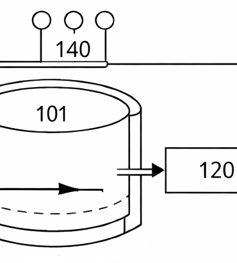
The invention relates to an energy-optimised operation of hot isostatic pressing (HIP) plants. Industrial HIP operation generates high energy demands and electrical peaks, while at the same time significant thermal energy can be lost unused from process cycles. The general solution approach consists of systematically recovering usable waste heat, storing it temporarily, and making it available again for subsequent process steps. In addition, plant operation is planned and controlled on a batch basis in such a way that energy consumption, thermal loads, and peak loads are reduced without compromising the required process windows.
The benefit lies in improved energy efficiency, lower operating costs, more stable process control, and traceable energy and CO₂ documentation per batch. The technology is particularly relevant for industrial HIP applications, where high-quality metal components, additively manufactured parts, or powder metallurgy materials are post-treated under demanding quality requirements.